
Our process
Six steps, in the order they actually happen
A standby generator is an electrical project with an engine attached. This is how a project runs from the first walk of the property to the day the system carries your house through a simulated outage.
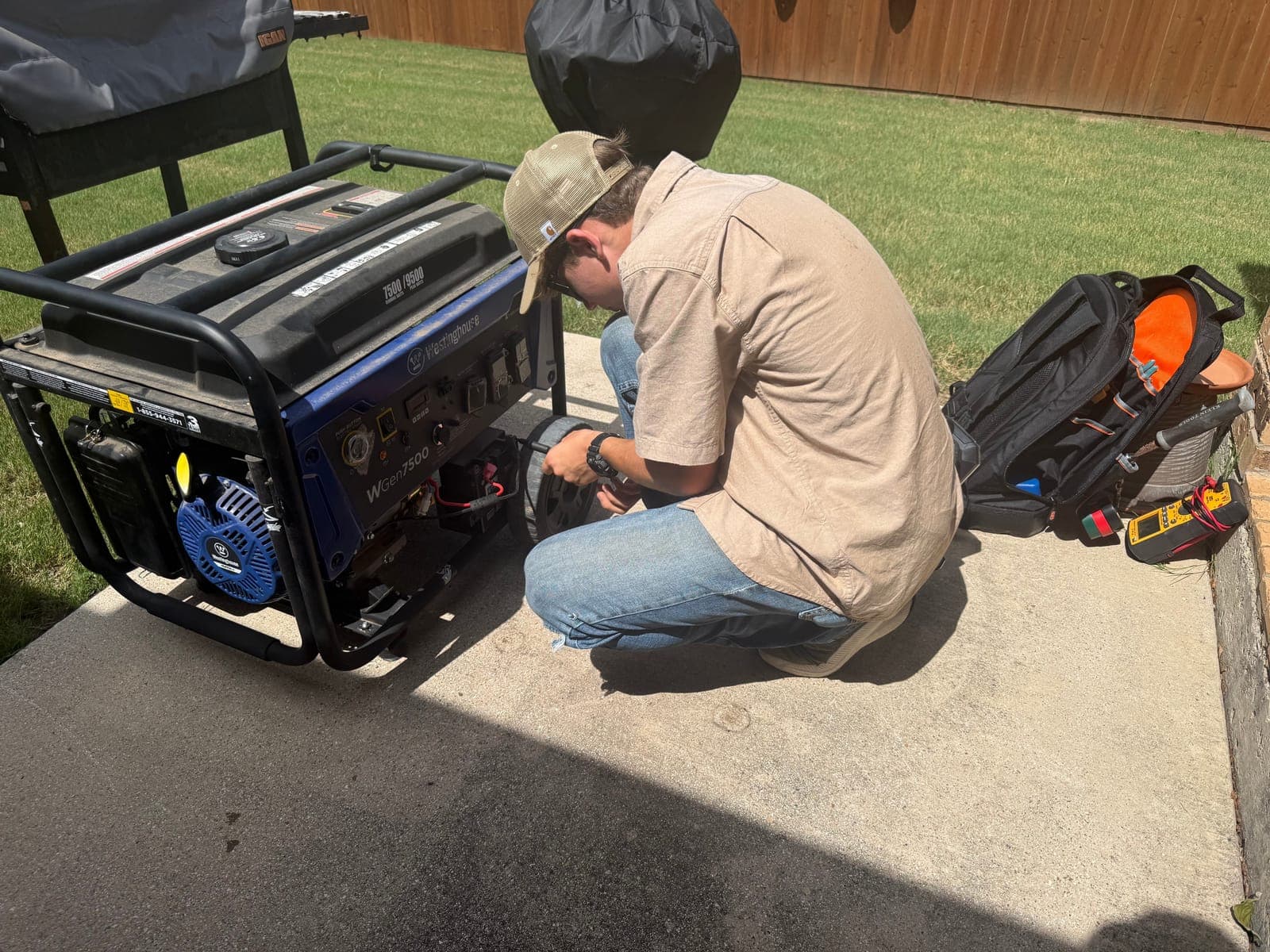
Start to finish
The six steps
No step here exists to pad a page. Skip the load calculation and you get an undersized machine. Skip the outage test and you find out on the worst night of the year.
- 01
Property and power assessment
A walk of the property inside and out. Main service entrance, panel condition, circuit layout, meter and fuel access, and the clear zones where a generator can legally sit.
- 02
Load calculation and system design
We calculate real starting and running loads — HVAC compressors, well pumps, heat strips — then design the system around them under Master Electrician oversight.
- 03
Transparent written proposal
One document with the equipment, the electrical work, the site prep and the permit in it. Line items, not a single round number, and no pressure to sign on the visit.
- 04
Site prep and installation
We handle municipal permitting and utility coordination, excavate and pour a steel-reinforced pad, set the unit, install the transfer switch and run the wiring in conduit.
- 05
Startup and simulated outage test
Commissioning, controller setup and a live simulated grid failure: we cut utility power on purpose and watch the system carry the house before we call it finished.
- 06
Walkthrough and ongoing service
You learn the controller, the exercise schedule and what each alarm means. The first full year of routine maintenance is included, and we are the ones who come back for it.
Steps one and two
What we are looking at during the assessment
The first visit decides almost everything else. Four things get established before anyone talks about a model number.
Load requirements and electrical profile
What has to run, and what it costs to start. A three-ton compressor and a submersible well pump both draw far more current in the first second than they do in the tenth, and that inrush is what actually sizes a generator.
Utility connections, circuits and entry points
We inspect the main panel for condition and available capacity, work out where backup circuits have to enter, and identify anything that needs correcting before new equipment is tied in.
Gas service line or fuel tank placement
Natural gas meter capacity and line pressure, or propane tank location, distance and regulator setup. An engine that cannot get steady fuel under load will start fine and then stumble when the AC kicks on.
Placement and clearances
The unit has to meet local safety clearance requirements from windows, doors, vents and property lines, sit where exhaust is not a problem, and stay accessible for service. Placement gets settled before design, not during the install.
Everything we find gets explained in plain terms, on the spot. You should finish the visit understanding how your own electrical service is put together, not holding a brochure. If you want the arithmetic behind the recommendation, that is covered in generator sizing, and the device that decides which circuits come back on is covered in automatic transfer switches.
The design work happens under Master Electrician oversight: equipment capacity, placement and clearances, wire routing, transfer switch type, and any panel work the installation depends on. If battery storage makes more sense for the loads you care about — or belongs alongside a generator — we will say so before you buy the wrong thing. That comparison lives on home battery backup.
Step three
The written proposal
One document, itemized, covering the whole scope: generator, transfer switch, electrical work, pad and site prep, permit and startup.
Itemizing is not just courtesy. It is the only way to compare our number with anybody else’s, because a cheaper bid usually means something was left out of it — the pad, the permit, the panel work, the gas line. When you can see the lines, you can see the gap.
Take it home. Nothing about this decision improves by being made at your kitchen table with a salesperson sitting across from it. If the project needs to be paid for over time, the lender options and the disclosures are laid out on our financing page — approval and terms are between you and the lender, not us.
Steps four and five
Installation, then a real test
What installation involves
- Municipal permitting and utility coordination handled by us, including the gas side where a new or upsized line is required.
- Excavation of the equipment site and a steel-reinforced concrete pad, so the machine sits level and out of ground moisture.
- The enclosure set and anchored at the clearances established during design, with service access kept clear.
- An automatic transfer switch installed inline with the breaker box, wired so the utility and the generator can never be connected at the same time.
- Copper wiring run in conduit, routed cleanly, with the panel and disconnects labeled for whoever opens them next.
- Fuel connection, regulator setup and pressure verification under running load.
What commissioning involves
Startup is where the machine stops being a delivery and becomes a system. The controller is configured, the exercise schedule is set, voltage and frequency are verified, and the transfer switch is tested against the loads it is actually going to carry.
Then we cut the utility feed at the property on purpose. The generator should sense the loss, start, take the load and run the house. We watch it happen with you standing there, then restore utility power and confirm it transfers back and returns to standby.
It is a short, unglamorous test and it is the whole point. A generator that has never been asked to carry your actual house is a machine with an unverified assumption inside it.
Step six
The walkthrough, and the years after it
Before we leave, you get the walkthrough: how to read the controller, what the exercise cycle is doing when it runs on its own, which alarms mean call us now and which mean call us Monday, and where the manual and warranty paperwork live.
Then the relationship changes shape. A standby generator is an engine that sits still for months and is expected to work perfectly the moment it is asked. Oil breaks down, batteries lose cranking capacity, rodents find enclosures. The weekly exercise cycle confirms the starter works — it cannot tell you any of the rest.
That is what our maintenance plans cover, in annual and bi-annual versions, and it is also why we service units other companies installed. Somebody has to.
Process questions
What people ask before they commit
Who pulls the permit, me or you?
We do. Municipal permitting and coordination with the utility are handled by Armored Power Systems as part of the project. You should never be the one calling the city to ask what inspection your generator needs.
Does the generator really need a concrete pad?
It needs a stable, level base that keeps the machine out of standing water and holds position over years of vibration. We excavate the site and pour a steel-reinforced concrete pad. Some manufacturers permit a composite pad in the right conditions, and we will tell you when that is the better call for your site.
What happens if my electrical panel is not up to the job?
We find that during the assessment rather than on install day. Sometimes it means a subpanel for backed-up circuits, sometimes a service or panel upgrade, sometimes only relabeling and a few corrections. Whatever it is appears in the written proposal as its own line item so you can see what the electrical work costs on its own.
Can I decide later which circuits get backed up?
Some of it, yes, but the earlier that conversation happens the cheaper it is. The transfer switch type and the load management strategy both depend on it, so we work through the priority list during design rather than after the equipment is on site.
Do you test the system before you leave?
Yes. We run a simulated grid failure by cutting utility power at the property, then confirm the transfer switch senses the loss, the engine starts, the load transfers and the system carries the house. Then it transfers back and returns to standby.
Related
Related reading
- Standby generator installationThe service itself: scope, equipment and what a whole-home install includes.
- Generator sizingHow the load calculation in step two actually works.
- Maintenance plansWhat step six looks like in year two and beyond.
- About Armored Power SystemsWho runs the company and the standards behind the process.
Two ways to start
Which one are you?
Need a generator
We start with what has to keep running at your property — the well, the AC, the freezer, the shop — and size the system around it. You get a written proposal with the equipment, the electrical work and the site prep all in one number.
Already own one
Repair, diagnostics and scheduled maintenance for Generac, Kohler and Briggs & Stratton systems — including units another company installed. Tell us the brand and what it is doing and we will bring the right parts.