
Buying guide
What Does a Whole-Home Generator Power?
A correctly designed system runs the air conditioning, the heat, the well, the septic pump, the refrigeration, the internet and the gate. What decides it is the transfer switch and the load plan, not the badge on the enclosure.
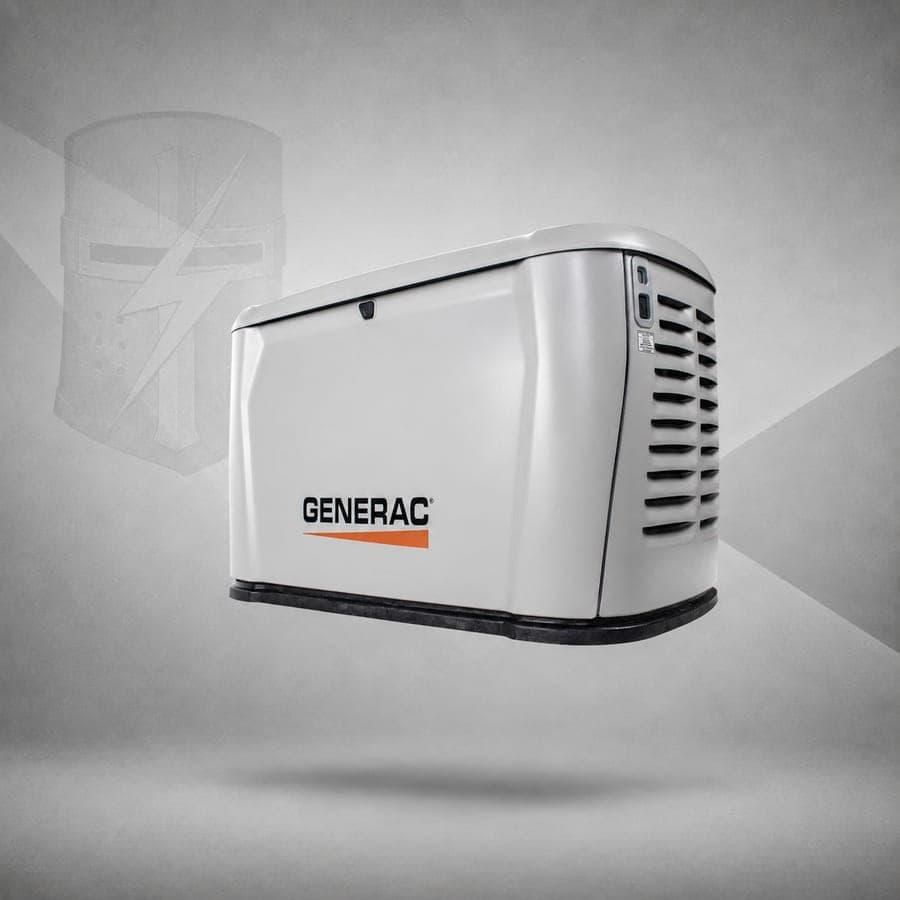
A whole-home standby generator powers whatever the transfer switch is wired to cover, which on a properly designed system means the air conditioning, the heat, the well pump, the septic pump, the refrigerators and freezers, the internet, the security system and the gate, the kitchen and the home office. The limits are set at design time, not by the machine.
That is the part most buying guides skip. Two houses with identical generators can behave completely differently in an outage, because one has a whole-panel transfer switch with load management and the other has a small load center covering eight circuits somebody picked in a hurry.
Three ways a house gets covered
Essential circuits
A sub-panel is fed through a load-center transfer switch, and a set of circuits is moved onto it: the well, the furnace blower, the refrigerator, some lights and receptacles, sometimes one air conditioner. Everything else stays dark. It is the least expensive path and it works well, as long as the household agrees to the list in advance and lives with it on day four.
Managed whole home
A service-entrance-rated transfer switch backs the whole panel, and load management modules stop the largest loads from colliding. Every circuit in the house remains available. The system stages the compressors, holds the water heater while the well pump starts, and sheds the shop if capacity gets tight. For most properties this is the best coverage per dollar, and it is the design we recommend most often.
Unmanaged whole home
The whole panel again, but with the generator sized so that everything can run simultaneously with nothing coordinating it. No compromises and no cleverness. It costs the most, because the machine has to survive a worst case that will probably never occur.
System by system, what actually stays on
Cooling and heating
The reason most people buy. In July it is the compressor; in a hard freeze it is the furnace or the heat pump. Gas heat is a small electrical load, essentially just the blower and controls. Electric heat is not: a bank of resistance strips is one of the largest continuous draws in the house, and it has to be declared during sizing or the system will disappoint you in February.
Water
On a well, this is not a convenience item. The pump, the pressure tank and any booster or filtration equipment go on the backed-up side, and the pump’s starting surge frequently sets the size of the whole system. The full argument is in our guide to wells during outages. An electric water heater is a large load that is usually managed rather than dropped, so you get hot water without letting it compete with the air conditioner.
Wastewater
Aerobic septic systems need their aerator running and their effluent pump working, and houses below their tank need a lift pump. These are small loads that people forget, and forgetting them on a well property produces water going in with nothing pumping it out.
Refrigeration
Kitchen refrigerator, garage refrigerator, chest freezers. Individually modest, collectively significant, and the loads with the clearest dollar value attached to keeping them running.
Kitchen
Microwave, dishwasher, small appliances and the range. An electric range or double oven is one of the biggest single loads in a modern house, so it is almost always a managed load. In practice that means you can cook, and the system will not let you cook while three other large things are also running.
Internet, Wi-Fi and phones
Routers, modems, mesh points and cell boosters are trivial electrical loads and disproportionately valuable during an outage. Whether you actually get service depends on your provider’s equipment holding up, but powering your side of it costs almost nothing.
Security, cameras and gates
Alarm panels, cameras, network video recorders, garage door openers and driveway gate operators. The gate is the one people appreciate most, because a powered gate on a long drive is the difference between leaving the property and not.
Medical equipment
Oxygen concentrators, CPAP machines, powered beds, dialysis and refrigerated medication. If anyone in the household depends on powered equipment, it belongs at the top of the must-run list and it should be discussed explicitly, not assumed. Electric cooperatives themselves advise members with life-support equipment to have backup generation ready.
Home office and work
Computers, monitors, network gear and printers are small loads. If you work from home, an outage stops being an inconvenience and starts being lost income, which changes the arithmetic on the whole project.
Barn, shop and livestock
Stock tank heaters, waterers, ventilation fans, feed equipment, lighting and the shop. Some of this is genuinely critical, particularly livestock water in summer. Most of it is a strong candidate for load management rather than for a larger generator.
| System | Essential circuits | Managed whole home |
|---|---|---|
| Well pump and pressure tank | Yes, normally the first circuit chosen | Yes, with priority over deferrable loads |
| Septic aerator and effluent pump | Only if specified | Yes |
| Air conditioning | Often one system, sometimes none | Yes, staged if there is more than one |
| Gas furnace blower | Yes | Yes |
| Electric heat strips | Rarely | Yes, managed |
| Refrigerators and freezers | Selected units | All of them |
| Electric range and oven | No | Yes, managed |
| Electric water heater | Rarely | Yes, managed |
| Internet, Wi-Fi, cell booster | Yes if on a covered circuit | Yes |
| Security, cameras, gate | Only if specified | Yes |
| Medical equipment | Yes, must be specified | Yes |
| Shop, barn, welder | No | Available, managed or shed |
| EV charger | No | Available, first to be shed |
General guidance only, not a specification of any particular system. What a given design actually covers depends on the transfer switch, the load calculation and the choices made with the homeowner. Every property is decided at design time.
What does not come back on
Being straight about the limits is more useful than a list of everything that works.
- Anything on a circuit the design did not cover. On an essential-circuit system this is most of the house, and it is the single most common source of disappointment. Read the covered-circuit list before you sign, not afterwards.
- The first ten to thirty seconds. The transfer switch confirms the outage, starts the engine, waits for stable voltage and frequency, then transfers. Lights go out and come back. Desktop computers reboot, and anything sensitive wants a UPS or battery storage, which carries the load with no gap at all.
- Loads the manager is holding. If the water heater is being held while the compressors run, it is off for those minutes. That is the system working, not failing.
- Services that depend on somebody else’s power. Your router has power. Whether the neighborhood equipment feeding it does is a separate question.
- Anything already broken. A generator restores electricity. It does not fix a failed well pump, a failed compressor or a panel that was already at the end of its life, which is occasionally why an electrical panel upgrade is part of the project.
How to decide what must run
The exercise is simpler than people expect. Walk the house and sort everything into three buckets.
- Must run, no discussion. Water, wastewater, refrigeration, heat or cooling, medical equipment, and the internet if you work from home.
- Should run, can wait a few minutes. Range, oven, dryer, water heater, dishwasher. These are the classic managed loads: available, but not all at once.
- Can wait for the utility. Vehicle charging, the pool, the shop, the hot tub. Shed first, restored last, and nobody minds.
That list, plus the nameplate data from the equipment, is what a load calculation is built on. It is also what makes two competing proposals genuinely comparable, because you can check each one against the same set of requirements. Our sizing guide covers the arithmetic, and the cost guide covers what moves the price once the list exists.
If you want that done properly at your property, the standby generator installation page sets out how we run the project, and requesting an estimate starts with the site visit rather than with a price over the phone.
Written by the Armored Power Systems team. Systems designed under Master Electrician oversight, TECL #41587.
Common questions
Coverage questions we get asked most
Will a whole-home generator run my air conditioning?
Yes, when the system was sized for it. Air conditioning is usually the largest load in the house and the largest starting surge, so it has to be in the load calculation from the beginning rather than added as an afterthought. Houses with two compressors are the common case where load management earns its place, staggering the two so they never start in the same instant.
Is there a gap before the generator takes over?
Yes, a short one. The transfer switch waits a few seconds to confirm the utility is genuinely down rather than flickering, signals the generator to start, lets it come up to speed and voltage, then transfers the load. Ten to thirty seconds is typical for a home standby system. Lights go out, then come back. Anything that cannot tolerate that gap needs battery backup rather than a generator.
Will my internet and Wi-Fi work during an outage?
Your equipment will have power, which is half the answer. The other half belongs to your provider: fibre and cable equipment in the neighborhood has its own backup, and how long that lasts varies. Cell sites also carry backup power that is not unlimited. Powering the router is worth doing, and it is sensible to have a second path such as a mobile hotspot.
Can it power everything in the house at the same time?
Only if you paid for a generator sized to do exactly that, and most people sensibly do not. The far more common design keeps every circuit available while a load manager prevents the largest loads from all running at once. In practice a household rarely notices, because the oven, the dryer and the shop compressor are not usually all needed in the same minute.
Will it charge my electric vehicle?
It can, and normally it is set up as a managed load that is shed first. Vehicle charging is the most deferrable large load in a modern house, so most designs keep the charger available for a long outage with a light load rather than sizing the generator around it. If charging during outages genuinely matters to you, say so during the load calculation, because it changes the answer.
Related
Keep reading
- Automatic Transfer SwitchesThe device that senses the outage, isolates the utility and decides which circuits come back on.
- Load ManagementSmart load control that lets a smaller, cheaper generator cover a bigger house.
- What Size Generator Do I Need for My House?Square footage is a proxy, not a method. Here is what actually sets the size: motor starting loads, how many of them can run at once, and whether the system manages them.
- Texas Power Outage PreparednessThe generation story gets the headlines. The wires between the substation and your house are what usually fail here. Verified numbers and a practical checklist.
Two ways to start
Which one are you?
Need a generator
We start with what has to keep running at your property — the well, the AC, the freezer, the shop — and size the system around it. You get a written proposal with the equipment, the electrical work and the site prep all in one number.
Already own one
Repair, diagnostics and scheduled maintenance for Generac, Kohler and Briggs & Stratton systems — including units another company installed. Tell us the brand and what it is doing and we will bring the right parts.