
Energy systems
Generac Complete Home Energy System
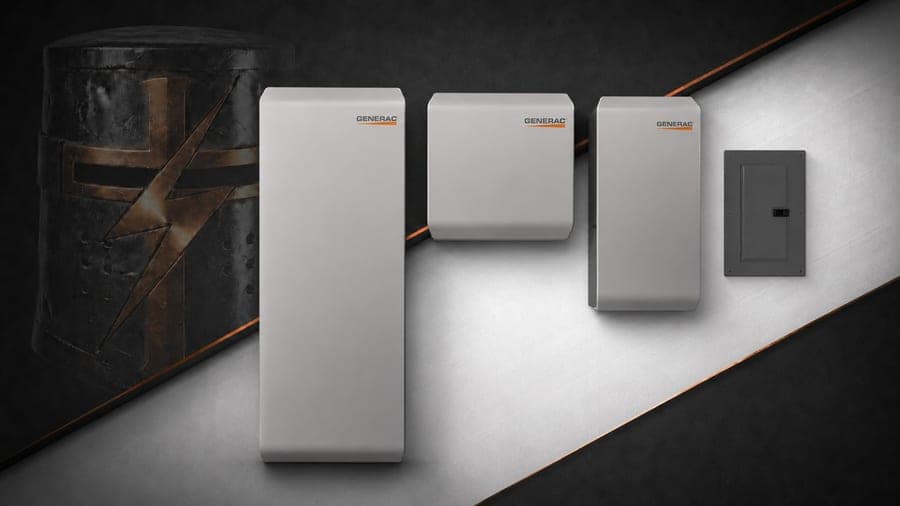
Solar production, battery storage, a standby generator and load control, specified together and managed by one set of controls instead of three separate systems sharing a wall.
Generac dealer #1033043
One company for the whole system
Plenty of companies understand solar but will not touch a generator. Plenty of generator installers cannot design storage. Armored Power Systems is a Generac Authorized Sales and Service Dealer, dealer #1033043, and we install and service both sides of this system with Master Electrician oversight and Texas Electrical Contractor license TECL #41587.
That matters more after installation than during it. When a system has four sources of power and something behaves oddly on a Tuesday in July, you want one number to call rather than three companies pointing at each other. It is the same crew that handles generator maintenance and the same crew that commissioned the battery.
The components
What goes into a complete Generac system
Not every property needs every piece. These are the parts available, and what each one is genuinely responsible for.
PWRcell 2 battery storage
9, 12, 15 or 18 kWh per cabinet · up to 10.5 kW continuous
The cabinet configures across four usable capacities, and a fully populated cabinet delivers up to 10.5 kW of continuous output. Capacity decides how long you run. Output decides what you can start. Both get designed against your loads, not against a package name.
PWRmicro PM-820 microinverters
820 VA output, two solar modules per unit
Module-level conversion, so shade or debris on one panel does not drag the string down with it. Each PM-820 serves two compatible modules and reports production individually, which makes a fault easy to find years later.
PWRmanager load control
Circuit-level priority
Decides which circuits run and in what order when available power is limited. Air conditioning, electric water heating, well pumps, pool equipment, ranges, dryers, EV charging and outbuildings are the usual candidates for management.
Smart Disconnect Switch
Central connection point
Coordinates solar, battery, generator and utility power, and separates the property from the grid during an outage. In qualifying designs it can also reduce the electrical service work a backup system would otherwise require.
ecobee by Generac
Thermostat and monitoring
Shows battery state, solar production and system status from a phone, and can adjust temperature setpoints during an outage to stretch stored energy. Small component, disproportionate effect on how long the battery lasts.
The sixth component is the generator itself, and it is the one most of our customers start with. Air-cooled and liquid-cooled Generac home standby units run on natural gas or propane and are sized off a load calculation, not off square footage. If the rest of the ecosystem never gets built, that machine still does the job it was bought for.
Outage sequence
Four sources, one decision tree
The value of an integrated system is that nobody has to be home to manage it. This is what happens without any human involvement.
- 01
Grid loss detected
The Smart Disconnect Switch separates the property from the utility. Nothing backfeeds the lines, and the house is now an island running on its own equipment.
- 02
Storage takes the load
PWRcell 2 supplies the circuits in your backup design immediately. No start delay, no noise, no interruption to anything with a clock in it.
- 03
Load control tightens up
PWRmanager holds back the loads you flagged as lower priority so the available power goes to the ones that matter. The pool pump waits.
- 04
Solar refills through the day
While the grid is still down, the array keeps producing behind the disconnect, carrying daytime loads and putting energy back into the battery.
- 05
Generator extends the run
If reserves fall or the outage runs long, the Generac standby unit starts, powers the property and, in supported configurations, recharges the battery.
- 06
Normal operation resumes
Utility power returns, the system reconnects, the generator completes its cooldown and shuts down, and the battery returns to its everyday charging schedule.
Build order
Start with what solves your problem now
| Configuration | What you get | Who it suits |
|---|---|---|
| Generator and load control | Standby generator, transfer equipment, load management, monitoring, optional thermostat integration. | Long rural outages, a well on the line, and no interest in solar today. |
| Solar and PWRmicro | Panels, microinverters, monitoring and the required electrical equipment. | The electric bill is the motivation and the roof is in good shape. |
| Solar plus PWRcell 2 | Production, storage, automatic backup operation and energy monitoring. | Frequent short outages, plus somewhere useful for daytime production to go. |
| The complete system | Solar, PWRmicro, PWRcell 2, Smart Disconnect Switch, standby generator, load control and monitoring. | Properties that want everyday production and multi-day outage coverage in one design. |
Before we quote
What the assessment covers
A complete system deserves a complete look at the property. Skipping this step is how people end up with equipment that does not do what they were told it would.
- Twelve months of electricity consumption, not one summer bill
- Main service size and panel condition, including whether a service upgrade is genuinely required
- Air-conditioner startup demand, measured per unit rather than assumed from tonnage
- Well pumps, septic equipment, electric heat and water heating
- Refrigeration, freezers and any medical equipment on the property
- Pool, shop, barn and outbuilding loads, which are routinely left off the list until they trip something
- Roof condition, orientation, shading and usable array area, or ground-mount options
- Natural gas availability or propane tank capacity
- Whole-property versus selected-load backup, and the runtime you actually want
- Future additions: an EV, a second HVAC system, a shop that is not built yet
Whole-home backup does not mean every appliance runs without limits. We would rather tell you what can operate, for how long, and under what conditions before installation than have you discover it during an ice storm. If the panel turns out to be the constraint, that gets addressed as part of the project rather than discovered halfway through.
Generac system questions
What people ask about PWRcell and the full ecosystem
What actually makes it a "complete" system rather than four purchases?
The controls. Solar, storage and a generator can all be bolted onto the same house by three different contractors and still fight each other, because nothing decides which source runs when. In the Generac ecosystem the Smart Disconnect Switch and PWRmanager make that decision automatically, which is why the components get specified together rather than added one at a time by whoever is available.
Can a Generac generator recharge the PWRcell 2 battery?
Yes, in properly configured designs. During an extended outage the standby generator can carry the house and put energy back into the battery, so the battery is available again when the generator cycles off. That combination is what lets a system ride out a multi-day event without anyone rationing power by hand.
Do I need solar panels to install PWRcell 2?
Not necessarily. The battery can be installed as backup storage and charged from the grid, subject to the system design and local requirements. Adding solar later is straightforward if the original electrical design anticipated it, which is exactly why we ask about future plans during the first assessment rather than after installation.
Will PWRcell 2 start my air conditioner?
A properly sized system starts many central air conditioners, but this is verified per unit, never assumed. What matters is the compressor startup demand against the available inverter output, not the storage capacity. If the numbers are close, a soft starter on the compressor usually closes the gap for far less than additional battery capacity costs.
Can I install the system in stages?
Yes, and most people do. You can start with a generator, with solar, or with storage, then add compatible components later. The one thing that has to happen on day one is designing the electrical side for where you intend to end up. Retrofitting an interconnection you did not plan for is where staged projects get expensive.
Can PWRcell 2 be added to solar panels I already own?
Sometimes. It depends on the existing inverter or microinverter equipment, the electrical design and the condition of the array. We inspect what is on the roof and in the service equipment before recommending a retrofit, and if an AC-coupled battery from another manufacturer is the better fit for your existing hardware, we will tell you that.
Does the generator run on natural gas or propane?
Generac home standby units typically run on either natural gas or liquid propane. Which one you use comes down to what is available at the property, and the assessment includes checking fuel supply and pipe sizing. An undersized gas line is one of the most common reasons a correctly sized generator underperforms.
Related
Keep reading
- Generac GeneratorsAir-cooled and liquid-cooled home standby systems from an authorized dealer.
- Home Battery BackupHow PWRcell compares with Tesla, Enphase and Sigenergy storage.
- Solar InstallationRooftop and ground-mount solar designed around backup.
- Load ManagementThe circuit priority logic that makes a smaller system work harder.
- Generator MaintenanceScheduled service that keeps the machine and the warranty intact.
- FinancingFinancing available through multiple lenders, subject to credit approval.
Two ways to start
Which one are you?
Need a generator
We start with what has to keep running at your property — the well, the AC, the freezer, the shop — and size the system around it. You get a written proposal with the equipment, the electrical work and the site prep all in one number.
Already own one
Repair, diagnostics and scheduled maintenance for Generac, Kohler and Briggs & Stratton systems — including units another company installed. Tell us the brand and what it is doing and we will bring the right parts.