
Energy systems
Home Battery Backup and Energy Storage
Batteries carry the house instantly and without a sound, but only for as long as the stored energy lasts. Knowing exactly where that line falls on your property is the whole job.
The honest version
A battery and a generator solve different problems
A home battery is instant and silent. When the utility drops, stored energy takes over fast enough that nothing in the house reboots, and it does it without an engine running outside a bedroom window at two in the morning. That is a genuinely better experience than a generator for the first few hours of an outage.
A battery is also finite. It holds a fixed number of kilowatt-hours and then it is empty. A standby generator takes a few seconds to start and makes noise while it works, but it will run for as long as the natural gas line or the propane tank keeps feeding it. On a rural property in a February ice storm, that difference is the entire conversation.
Which is why a lot of the properties we work on end up with both. The battery covers the transfer gap and the short interruptions. The generator covers day three. Neither one is pretending to be the other.
Side by side
Battery storage versus a standby generator
Same outage, two very different machines. Read the runtime row twice — it is the one that decides most projects.
| Factor | Home battery | Standby generator |
|---|---|---|
| Response time | Effectively instant. The transition is fast enough that clocks, routers and computers never notice. | Seconds. The unit senses the outage, starts, warms briefly and then the transfer switch throws. |
| Runtime | Finite. It runs until the stored kilowatt-hours are gone, then it needs sun, grid or a generator to refill. | As long as fuel keeps arriving. On natural gas that is usually the length of the outage. |
| Noise | Silent. Nothing moves except cooling fans. | An engine runs the entire time the utility is down, including overnight. |
| Large motor starts | Depends on inverter output, not on stored capacity. Has to be verified against the actual equipment. | Depends on the kW rating and the alternator. Also has to be verified, not assumed. |
| Site requirements | Wall or floor space within temperature limits, indoors or in a rated outdoor location. | A pad, code clearances from windows and openings, and a gas line or propane tank. |
| Everyday use | Works every day if you have solar or time-of-use rates. It is not idle equipment. | Sits and exercises weekly. It earns its keep only during outages. |
| Maintenance | Low. Inspection, firmware and monitoring rather than oil and filters. | Scheduled engine service, and skipping it is how units fail on the night they are needed. |
Sizing
Every battery has two numbers, and people only shop for one
Capacity is measured in kilowatt-hours. It answers how long. Output is measured in kilowatts. It answers how much at once. A battery with plenty of stored energy and modest output will run your refrigerator, your lights and your network for a long time and still refuse to start a five-ton air conditioner.
This is where storage gets oversold. Somebody quotes capacity, the homeowner assumes the house will run like normal, and the first real outage teaches them otherwise. We evaluate both numbers against your actual loads, which means checking running amperage and startup amperage on the equipment that matters: the HVAC compressor, the well pump, the septic pump, the shop.
When the startup demand is the problem rather than the capacity, the fix is usually cheaper than more battery. A soft starter on the compressor, a load-management scheme that keeps two big loads from starting together, or a dedicated essential-load panel will often get you there for a fraction of what another battery costs.
Equipment we install
Four platforms, chosen against the property
There is no single best battery. The right one depends on your existing solar equipment, your large loads, whether a generator is in the plan and how much space you have.
Tesla Powerwall 3
13.5 kWh per primary unit
A high-output unit with the solar inverter built in, which simplifies the equipment wall on a solar-plus-storage project. Strong continuous output makes it a common answer where large loads have to start on battery power. Expandable with additional units.
Enphase IQ Battery 5P
Modular 5 kWh units
AC-coupled storage built around Enphase microinverter architecture. The 5 kWh increment is the smallest step of the four, which matters when the honest answer is that you need a little more than one battery and nowhere near two.
Generac PWRcell 2
9, 12, 15 or 18 kWh per cabinet
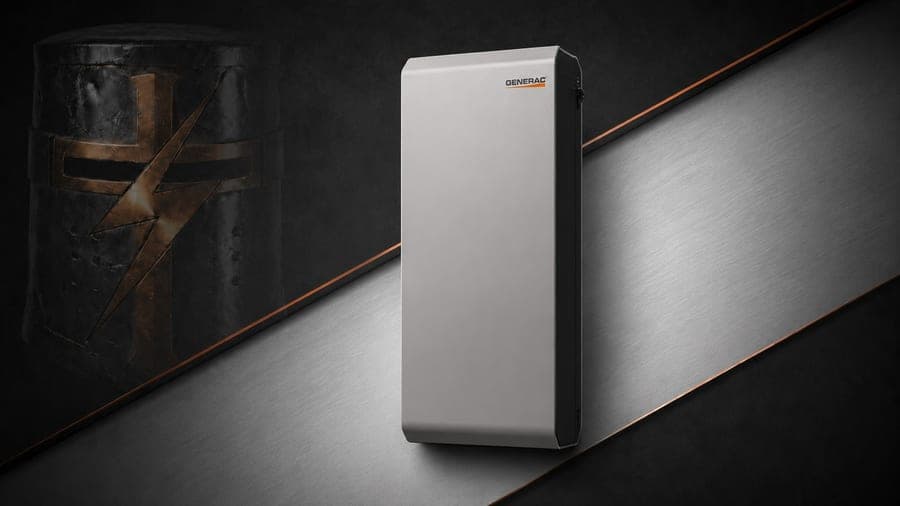
One cabinet configures across four capacities with up to 10.5 kW of continuous output when fully populated. It is the platform that ties directly into Generac load control and Generac standby generators, so it is usually the shortlist when a generator is already part of the plan.
Sigenergy SigenStor
Modular stacking architecture
An integrated platform that combines power conversion, storage and energy management in one compact stack, with residential and commercial configurations and EV charger integration. Worth a look where equipment space is tight or the design has to grow later.
We are a Generac Authorized Sales and Service Dealer, dealer #1033043, so the PWRcell platform gets a close look on any project where a Generac generator is involved. That does not make it the automatic answer. If your roof already carries Enphase microinverters, the Enphase battery is usually the cleaner retrofit, and we will say so.
How it runs
From assessment to commissioning
- 01
Power and property assessment
We review utility bills, the electrical service, any existing solar, the major appliances and the circuits you want protected. Measured loads, not estimates from a brochure.
- 02
System design
We compare compatible platforms and size for capacity, output, expected runtime and room to expand. You see what the system will carry and for how long before anything is ordered.
- 03
Installation
Battery equipment, controls, disconnects, load-management components and the supporting electrical work, installed under Master Electrician oversight to current code.
- 04
Commissioning and handover
We test the complete system, configure monitoring, walk you through what an outage will actually look like, and set expectations for the loads that are and are not in the backup design.
Where storage earns it
Properties where a battery is the right first move
- Outages are short and frequent rather than long and rare, and the annoyance is the reset, not the duration.
- Something in the house cannot tolerate a gap: a home office, a network closet, medical equipment, a freezer full of processed beef.
- There is already a solar array producing power that currently goes to the utility for whatever your provider chooses to pay for it.
- Noise matters. A neighborhood lot with close setbacks is a different problem than forty acres outside Santo.
- A generator is already installed and doing its job, and what is missing is the first ten seconds and the quiet.
If none of those describe your property and the real fear is a four-day winter outage with a well pump on it, we will point you at generator installation instead and be straight about why. Both paths run through the same panel and service assessment, so nothing you spend on that part is wasted either way.
Battery questions
What people ask before they commit to storage
How long will a home battery actually run my house?
Do the arithmetic rather than trusting a headline number. A 13.5 kWh battery serving loads that average 1 kW will run roughly 13 hours. Serving loads that average 3 kW, closer to four. Central air conditioning in a Texas August pulls a lot more than most people guess, which is why we measure your real usage and pick the loads to back up before choosing capacity.
Can a battery run my air conditioner or well pump?
Sometimes, and it has nothing to do with how many kilowatt-hours the battery stores. Motors need a burst of current at startup that can be several times their running draw, so what matters is the inverter output and the startup demand of that specific compressor or pump. We check running amps, locked-rotor amps and what else might be running at the same time. A soft starter on the compressor often solves it.
Do I need solar panels to install a battery?
No. Several platforms charge from the utility grid and discharge during an outage with no array involved. The trade-off is that a battery-only system starts an outage with whatever it stored and has no way to refill until the grid returns. Solar changes that, which is why it comes up on any conversation about multi-day outages.
Is a battery cheaper than a standby generator?
Not usually, when you compare equal amounts of backup. Storage is priced by capacity, so buying enough kilowatt-hours to carry a house through a multi-day outage gets expensive quickly, while a generator sized for the same house runs on fuel you already buy. Batteries win on immediacy, silence and everyday usefulness. Generators win on duration and cost per hour of backup.
Can I have both a battery and a standby generator?
Yes, and on properties with long outage history it is often the design that makes the most sense. The battery covers the transfer gap, the flickers and the short interruptions with no engine running. The generator handles the third day. Compatibility depends on the specific battery platform, generator controller and wiring configuration, so we confirm it against the equipment before proposing it.
Can a battery be added to solar panels I already have?
Frequently, yes. Depending on the existing inverter or microinverters we may be able to design AC-coupled storage around the array you already own instead of replacing it. We inspect the modules, the inverter equipment, the main service, the interconnection gear and the available space first, then tell you what is possible and what is not worth doing.
What happens to the battery when the grid comes back?
The system reconnects, stops discharging and begins recharging from solar, the grid or both depending on how it is configured. If you are on a rate plan where electricity is cheaper at certain hours, storage can be set to charge then and discharge later. That is the part of a battery that keeps working on the 360 days a year when nothing goes wrong.
Related
Keep reading
- Generac PWRcell SystemsSolar, storage, generator and load control designed as one ecosystem.
- Standby Generator InstallationThe long-duration half of the backup conversation.
- Generator SizingLoad calculations for wells, HVAC, shops and whole homes.
- Solar InstallationGrid-tied solar designed around what you want backed up.
- Load ManagementPrioritized circuits and soft starts that stretch a smaller system.
- Automatic Transfer SwitchesThe device that decides which circuits come back on.
Two ways to start
Which one are you?
Need a generator
We start with what has to keep running at your property — the well, the AC, the freezer, the shop — and size the system around it. You get a written proposal with the equipment, the electrical work and the site prep all in one number.
Already own one
Repair, diagnostics and scheduled maintenance for Generac, Kohler and Briggs & Stratton systems — including units another company installed. Tell us the brand and what it is doing and we will bring the right parts.