
Service area
Backup Power for Hudson Oaks, TX
The city’s own utilities page lists two electric providers. One neighbor is a cooperative member with no retail choice, the next is an Oncor customer shopping plans. Same storm, two different phone calls.
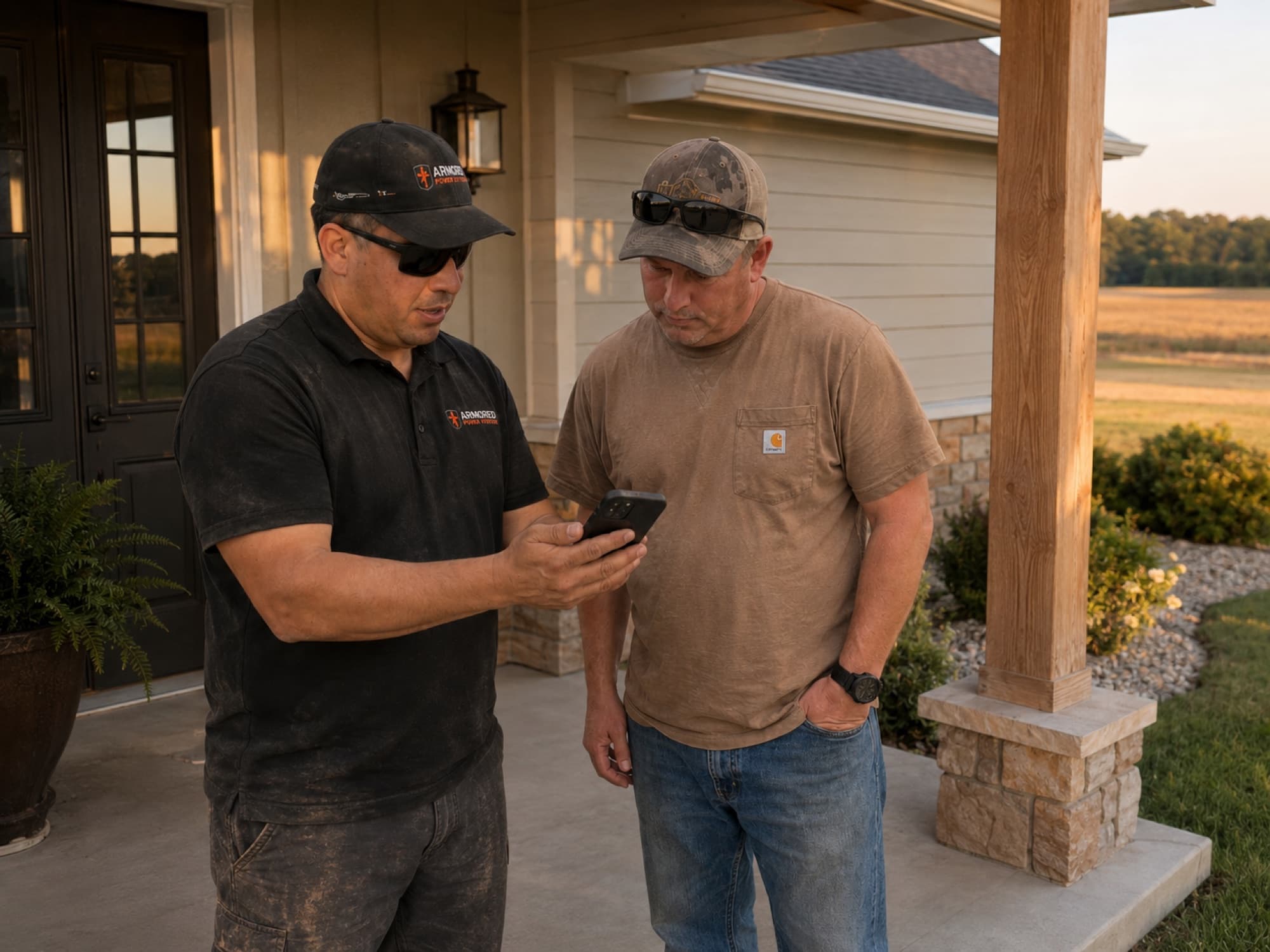
Two utilities, one town
The cleanest split-territory story in the county
Most places we work are served by one electric utility and the only question is which. Here the city publishes both. Its residents’ utilities page names Tri-County Electric Cooperative and Oncor, with a separate contact number for each, and it is the only municipality in our territory that states the split so plainly.
That matters more than it sounds. A cooperative is member-owned and sits outside retail competition, so there is no plan to shop and no third party between you and the wire. Oncor is a delivery utility in the competitive market, so the company that bills you is not the company that restores you. When a line goes down, the two halves of this town are making different calls to different organizations with different crews.
It also means a generic quote written from a city name is guessing. We read the bill on the site visit, confirm who owns the meter, and design from there. The rest of the county has the same problem in less obvious form, which is what our Parker County page is mostly about.
The town
Forty-eight years old, and built around an interstate
Incorporated in 1978 with 488 residents at the 1980 census, and 2,174 by 2020. Three square miles, cut in half by I-20.
A commercial gateway
Three major routes meet here: the interstate, the old Bankhead Highway and US 180. H-E-B opened its eighth North Texas store in this city in 2019. The result is a retail and service frontage far larger than a population of two thousand would suggest, and a real market for commercial standby power.
A town that thinks about water
In 2022 the city connected to Fort Worth’s 36-inch main, replacing its dependence on Lake Weatherford, and it supplies water to customers both inside and outside the limits. Municipalities that have just re-plumbed their raw water supply tend to understand redundancy arguments without much explanation.
Two school districts
Students here attend both Weatherford ISD and Aledo ISD, which is another symptom of a town that grew up between two older ones. Practically, it means the housing stock is mixed in age and the panels vary a great deal from street to street, so we check the service and panel before we size anything.
Fuel
Partial gas coverage, which is the hardest kind to plan around
Texas Gas Service is the utility, with 271 residential and 63 small commercial meters recorded by the Railroad Commission for 2022. Against 2,174 residents that is roughly one residential meter per eight people. Not a gas town, not a propane town, a mixture, which is exactly the case where an assumption costs somebody money.
Where there is a meter, the question becomes capacity rather than availability. A 22 kW air-cooled unit at full load wants roughly 289 cubic feet an hour on top of whatever the furnace, range and water heater already draw, and plenty of existing runs were never sized for that. Where there is no meter, the design moves to propane, a tank sized for a multi-day run, and the ten-foot separation between tank and generator that quietly dictates pad placement.
Atmos Energy serves other parts of this county, including Springtown. It does not serve this city. That distinction is small, checkable and a fair test of whether the person quoting you has looked anything up.
How a job runs here
Four steps, with one extra check at the front
On a split-territory street, the first thing we establish is who owns your meter. Everything downstream depends on it.
- 01
Confirm the utility and the fuel
We read the electric bill to see which utility owns your meter, then check for a gas meter at the house or a tank in the yard. Those two answers change the transfer switch selection, the outage narrative and the fuel design.
- 02
Walk the property and calculate the load
Service size, panel condition, grounding, circuit inventory and the loads that genuinely have to keep running. On septic properties we find the drainfield before we pick a pad location, because that constraint does not move.
- 03
Design, quote, permit
Clearances from operable openings and combustible walls, conduit and fuel routing mapped before anyone digs, and a flat-rate line-item estimate covering equipment, electrical work and site prep in one number.
- 04
Install, test under load, hand over
Steel-reinforced pad, transfer switch inline with the panel, copper in conduit, then a simulated grid failure so you watch it pick the house up. Warranty registered, and the first full year of maintenance included.
What we do here
Residential and commercial
Standby Generator Installation
Whole-home and essential-circuit designs, on natural gas where the meter exists and propane where it does not.
See detailsCommercial Generators
Standby power for the shops, clinics and service businesses along the corridor, where an outage costs a day of trade.
See detailsAutomatic Transfer Switches
Service-rated and non-service-rated switches, and the decision about which circuits come back first.
See detailsElectrical Panel Upgrades
A town built over four decades has four decades of panels in it. We check capacity before we quote a machine.
See detailsGenerator Maintenance
Scheduled service that keeps the unit ready and the manufacturer warranty documented.
See detailsHome Battery & Storage
Paired with standby equipment for loads that cannot tolerate the seconds an engine takes to start.
See details
Nearby
Either side of the interstate
- Willow Park, TXEast, with about 130 residential gas meters in a city of nearly 5,000.
- Weatherford, TXWest, and served by a city-owned electric utility with its own rulebook.
- Aledo, TXSouth, where the city limits and the school district tell two different stories.
- Brock, TXSouthwest, on propane, with no gas utility of any kind.
- Parker County, TXThe county picture, including the parts with no gas and no permits.
Common questions
Hudson Oaks questions
Most of them start with the utility, because here that is genuinely the first question.
My neighbor is on the co-op and I am not. How is that possible?
It is normal here, and the city says so itself. Its utilities page states that electricity is provided by Tri-County Electric Cooperative or by Oncor through a choice of providers, and lists a phone number for each. Electric service territory was drawn decades ago along lines that had nothing to do with the present street plan. Two houses facing each other can sit in different certificated areas, with different outage numbers and different billing arrangements.
Does it change anything about the generator itself?
Not the machine, but it changes the picture around it. A cooperative member is an owner rather than a customer, cannot shop retail providers, and is served by a utility whose lines run long distances to relatively few meters. In 2021, Tri-County reported an average of 1,907.9 minutes off per member to the federal government, nearly 32 hours. Oncor reported 558.8 minutes across four million customers that year and 532.5 minutes in 2024. Both include major storm days. Those are different exposure profiles on the same street.
Is there natural gas at my house?
Maybe. Texas Gas Service holds the franchise and the Railroad Commission recorded 271 residential and 63 small commercial meters here for 2022, in a city the 2020 census counted at 2,174. That is roughly one residential meter for every eight residents, so a meaningful minority of homes have gas and the rest are propane or all-electric. It is worth checking rather than assuming, because the fuel decision drives the tank, the supply line and the pad location.
What happens to my water when the power goes out?
Inside the city, water and sewer come from the municipal system, which connected to Fort Worth’s 36-inch main in 2022 in place of its previous reliance on Lake Weatherford. City systems have their own backup arrangements, and pressure usually holds for a while. Outside the city, or on a private well, the answer is simpler and worse: no power, no pump, no water, and a septic aerator that stops as well. That is the load list that decides sizing on the properties north and south of town.
Do you install standby generators for businesses on the corridor?
Yes. The interstate splits this city into a northern and a southern half and three major routes meet here, which is why the retail and service frontage is disproportionate to the population. For a shop, clinic, restaurant or veterinary practice, the calculation is different from a house: refrigeration, point-of-sale, network, lighting for safe egress and the cost of a closed afternoon. See our commercial generators page for how we scope that work.
Related
Keep reading
- Commercial GeneratorsStandby power for shops, clinics, churches and small facilities.
- Automatic Transfer SwitchesWhat decides which circuits come back on, and in what order.
- Standby Generator InstallationThe full residential scope, from load calculation to live testing.
- Willow ParkThe town next door, and a propane story rather than a gas one.
- WeatherfordMunicipal utility rules, and the parallel-operation clause that governs generator hookups.
- Maintenance PlansAnnual and bi-annual service, with the first year included on new installs.
Two ways to start
Which one are you?
Need a generator
We start with what has to keep running at your property — the well, the AC, the freezer, the shop — and size the system around it. You get a written proposal with the equipment, the electrical work and the site prep all in one number.
Already own one
Repair, diagnostics and scheduled maintenance for Generac, Kohler and Briggs & Stratton systems — including units another company installed. Tell us the brand and what it is doing and we will bring the right parts.