
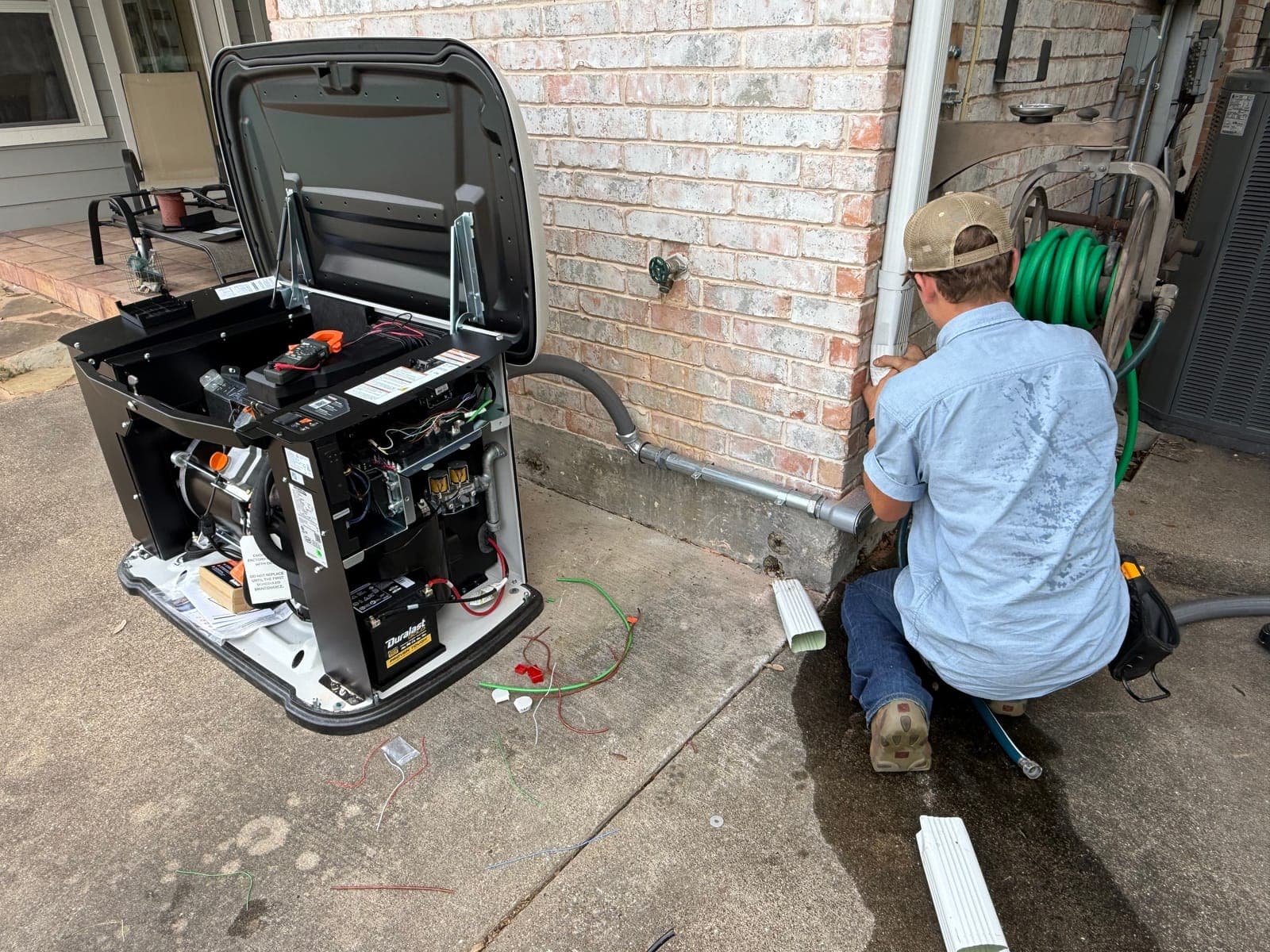
A generator that has run its weekly exercise for eleven months without complaint can still fail to carry the house on the coldest night of the year. That is not bad luck. A three-minute no-load exercise in mild weather asks almost nothing of the machine, and the things February asks about are precisely the things the exercise never tests.
The battery, nearly always
The most common reason a standby unit does not start is its battery, and cold is what exposes it. A battery with enough capacity to crank an engine at 70°F can be well short of what the same engine needs at 19°F, when the oil is thicker and the chemistry is slower. The controller reports a healthy battery right up until the moment it is asked for real current.
This is the failure that is easiest to prevent and the most annoying to discover. A load test on a scheduled visit either passes or it does not, and a battery that is going to fail in February usually fails that test in October.
Fuel pressure that only sags under load
The second one is fuel. A regulator or a gas line that is marginally undersized will pass a no-load exercise without a flicker, then sag the moment the generator picks up the house and the furnace, the well pump and the fridge all want to start.
On propane this gets worse in cold weather for a physical reason: vaporisation slows as the tank cools, so a tank that delivers fine in July can struggle in a hard freeze — particularly a small tank that is also running low. Runtime is a fuel question before it is a generator question.
Wildlife, which is not a joke
The third is the one people laugh at until it happens. A generator enclosure in winter is warm, dry and sheltered, which makes it attractive to exactly the animals you do not want inside it. Rodents chew harness insulation. Wasps build in vents. Neither shows up on the controller, and neither is visible without opening the enclosure and looking.
What this means in practice
None of the three is exotic, and none of them is found by watching the weekly exercise run. They are found by a technician with a load tester and the enclosure open, which is the whole argument for scheduled maintenance rather than waiting for a fault.
If your unit has not had a service visit in a while, start with a service call rather than a plan. We will tell you what it needs first, and you can decide about a plan afterwards.