
Energy systems
Home Battery Storage, Solar and Complete Energy Systems
A standby generator is the backbone of backup power on most Texas properties. Storage and solar are what you add when you want the lights to never blink, or you want the sun hitting your roof to do something useful.
What belongs here
Two different problems, one electrical system
Backup power and energy production are not the same question, and the equipment that answers one does not automatically answer the other.
A standby generator answers the first question. The utility drops, something has to carry the property until it comes back, and the machine outside handles it. Solar answers the second. You are buying electricity all day and there is an unused roof or an unused acre above the meter.
Battery storage sits between the two. It covers the seconds a generator takes to start, it runs at two in the morning without waking anyone, and it gives solar somewhere to go when the grid is down. Most properties do not need all three. If keeping the well and the heat running through a multi-day winter outage is the entire goal, a standby generator installation is usually the shorter path, and we will tell you that before we quote anything else.
Home Battery & Energy Storage
Instant, silent backup for the loads that cannot tolerate the few seconds a generator takes to start.
See detailsGenerac PWRcell Systems
Solar, battery storage and load control managed as one system rather than three purchases.
See detailsSolar Installation
Grid-tied solar designed around what you want backed up, not just what you want offset.
See detailsSolar Removal & Reinstallation
Detach and reset for a roof replacement, with the array mapped, protected and recommissioned.
See details
Straight comparison
What each piece is actually good at
Every component here has a real strength and a real limit. The limits matter more, because that is where systems get oversold.
| Component | What it does well | What it will not do alone |
|---|---|---|
| Solar array | Produces power in daylight and reduces what you buy from the utility across the year. | Keep the house energized during an outage. Grid-tied solar shuts down when the grid does. |
| Battery storage | Instant, silent backup. Stores solar for the evening. Rides through flickers and short outages. | Run forever. Capacity is finite, and refilling needs sun, a working grid or a generator. |
| Standby generator | Long outages, hard motor starts, February nights when solar production is close to nothing. | Respond instantly. There is a start-and-transfer delay, and an engine runs the whole time. |
| Load management | Stretches whatever capacity you bought across more of the house. | Add capacity. It prioritizes the power you already have rather than creating more. |
Read down the right-hand column and the case for combining them writes itself. A battery covers what a generator is slow at. A generator covers what a battery runs out of. Smart load management makes both of them go further, which is frequently the difference between a system that fits the budget and one that does not.
During an outage
How a layered system behaves when the power drops
This is the sequence on a property that has all of it. Fewer components means fewer steps, not a different logic.
- 01
The grid goes down
The system detects the loss and separates the property from the utility so nothing backfeeds the lines. Nobody in the house necessarily notices.
- 02
The battery picks up
Stored energy carries the circuits in your backup design immediately. Clocks do not reset, the network stays up, and no engine has started yet.
- 03
Solar keeps producing
With the right equipment, the array continues generating while safely isolated from the grid, supporting the house and refilling the battery through the day.
- 04
The generator extends it
When reserves drop or the outage runs past what storage can cover, the standby unit starts, carries the load and, in supported configurations, recharges the battery.
- 05
Utility power returns
The system reconnects, the generator shuts down after its cooldown, and everything goes back to normal operation without anyone touching a switch.
One caution worth stating plainly: generator and battery integration depends on the manufacturer, the controller and the approved wiring configuration. Not every pairing is supported. We confirm compatibility against the specific equipment before we put an integrated system in a proposal.
Sequencing
You do not have to buy it all at once
What matters is that the first thing you install does not make the second thing harder. That is a design decision, and it happens on day one.
Generator first
The right call when outages are long, the property is rural, and there is a well, a septic pump or livestock water on the line. Add storage later for the silent, instant layer.
See how sizing worksBattery first
Sensible when outages are short but frequent, or when a home office, medical equipment or a server cannot tolerate a start-up gap. Solar and a generator can both come later.
Compare battery platformsSolar first
Reasonable when the bill is the motivation and the roof is in good shape. Design it now for storage you might add later, or you will pay twice for the same electrical work.
How our solar process runsThe order changes the electrical work. A battery added to an existing array may need an AC-coupled design. A generator added after a battery needs a transfer arrangement both systems agree on. Even the condition of your service panel can decide which sequence is cheaper. Tell us the whole plan at the first visit, including the parts you are not buying yet.
Equipment
The platforms we design around
Storage, solar and generation from one contractor means the equipment has to agree with itself. These are the lines we build on.
 Sigenergy SigenStorEnergy controller, stackable battery modules, backup switch and load hub as one stack.
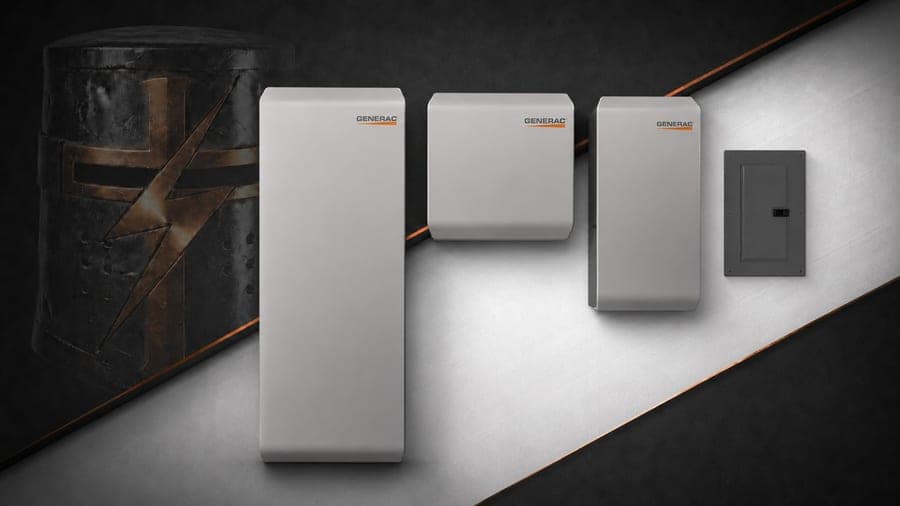 Generac PWRcell 2Inverter, battery cabinet and transfer equipment managed with the generator.
 PWRcell 2 inverterThe piece that decides how solar, battery and grid hand off to each other.
 Solar modulesSized around what you want running in an outage, not just annual offset.
Common questions
Questions homeowners ask before they choose
Should I get a generator or a home battery?
It depends on what you are protecting against. If the worry is a multi-day winter outage with a well pump and central heat on the line, a standby generator is usually the shorter path, because it runs as long as the fuel holds out. If the worry is short outages, flickers and sensitive electronics, a battery covers those without an engine running. Plenty of properties end up with both, and the two can be designed to work together.
Do I need solar panels to install a home battery?
No. Several battery platforms charge from the utility grid and discharge during an outage with no solar array involved. Solar changes what the battery can do during a long outage, because it gives the battery a way to refill while the grid is still down. Without solar, the stored energy is whatever you had when the power went out.
Will my solar panels keep the house running during an outage?
Not on their own. A standard grid-tied solar system shuts down when the utility goes down, by design, so it cannot backfeed the lines while a crew is working on them. Producing power during an outage requires compatible battery storage or a hybrid inverter with backup capability plus the isolation equipment that separates the property from the grid.
Can battery storage and a standby generator work together?
Yes, in configurations the manufacturers support. The battery carries the first seconds and the shorter outages, and the generator starts when reserves drop or the outage runs long. Compatibility varies by battery platform, generator controller and electrical design, so we confirm it against the specific equipment before proposing an integrated system rather than assuming it.
Can I add battery storage to solar panels another company installed?
Often, yes. It depends on the existing inverter or microinverters, the electrical service and the battery platform we would pair with it. In many cases an AC-coupled battery can be added without replacing the array. We inspect the existing equipment, service size and interconnection first and tell you honestly if the retrofit does not make sense.
Do you handle commercial and rural energy projects?
Yes. Shops, ranches, agricultural properties and small facilities get a separate site assessment because service voltage, phase, motor loads and required runtime drive a different design than a house does. Larger and three-phase projects are engineered individually rather than pulled from a residential package.
Related
Where to go next
- Standby Generator InstallationThe primary backup path for most rural and semi-rural Texas properties.
- Generator SizingThe load calculation that decides how much system you actually need.
- Generac PWRcell SystemsSolar, storage, generator and load control managed as one ecosystem.
- Load ManagementHow prioritizing circuits lets a smaller system cover a bigger house.
- Electrical ServicesPanels, surge protection and the infrastructure backup power depends on.
- Maintenance PlansScheduled service for the equipment once it is in the ground.
Two ways to start
Which one are you?
Need a generator
We start with what has to keep running at your property — the well, the AC, the freezer, the shop — and size the system around it. You get a written proposal with the equipment, the electrical work and the site prep all in one number.
Already own one
Repair, diagnostics and scheduled maintenance for Generac, Kohler and Briggs & Stratton systems — including units another company installed. Tell us the brand and what it is doing and we will bring the right parts.