
Ownership
Home Standby Generator Maintenance Checklist
A standby generator spends nearly all of its life not running. Everything on this list exists to make sure the few hours that matter actually happen.
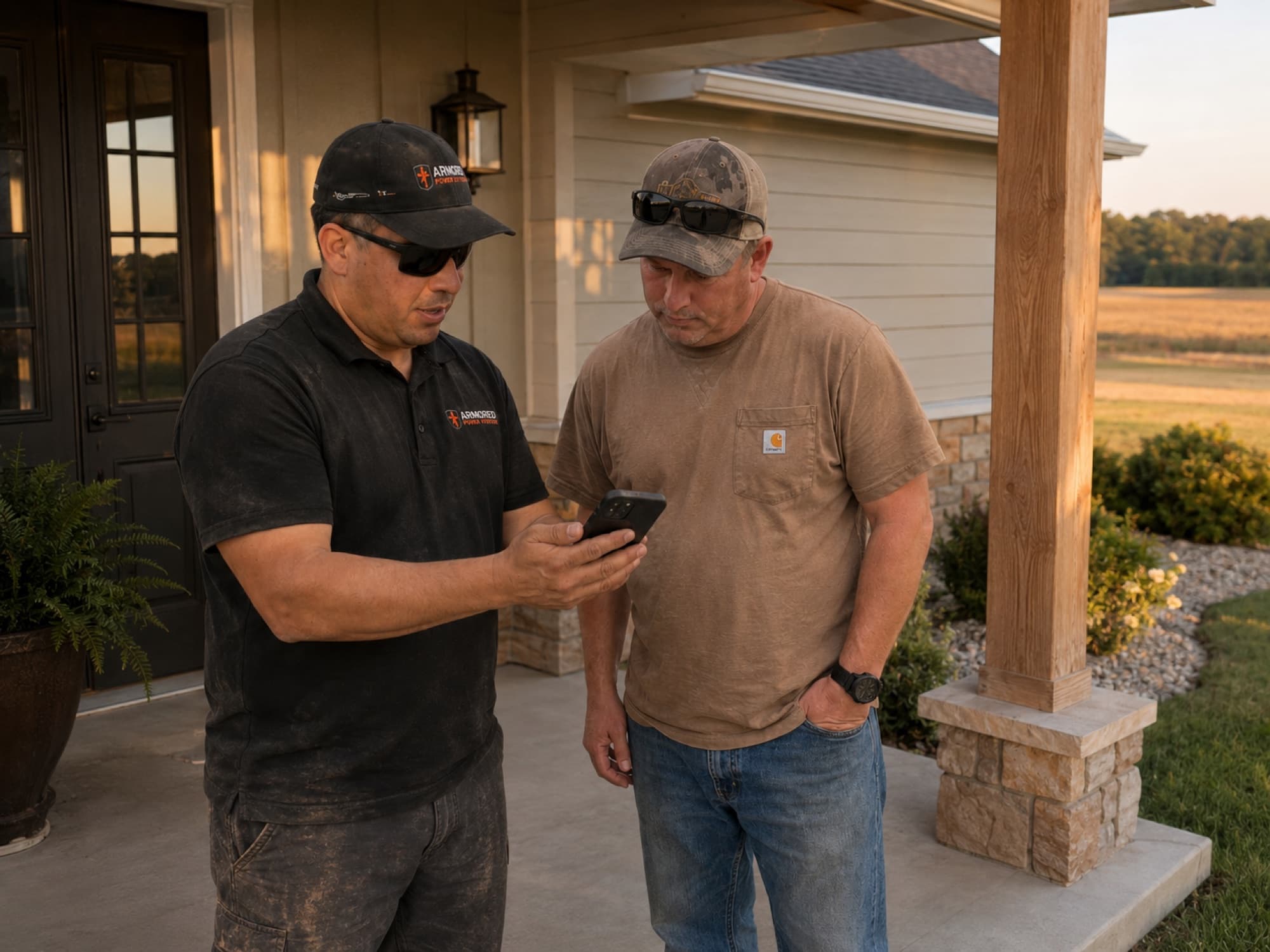
A home standby generator runs a few minutes a week and then waits. That is an unusual duty cycle, and it produces an unusual failure pattern: these machines almost never wear out, they simply stop being ready. Maintenance is the whole difference between a system that starts on the night you need it and an expensive box on a concrete pad.
What follows separates the checks you can safely do yourself from the work that needs a technician, tools and the manufacturer’s service data. Both halves matter. Neither replaces the other.
Before you touch anything
A standby generator can start without warning. It starts for its scheduled exercise, and it starts the instant the transfer switch sees the utility drop, whether or not you are standing in front of it with a socket set. Every owner task below assumes three steps first.
- Put the controller in OFF, not AUTO. This stops the unit from auto-starting.
- Isolate the battery, negative terminal first.
- Let the engine and exhaust cool before working near either.
And one more: do not open the transfer switch. Line-side conductors inside a transfer switch are live even when the generator is off and the main breaker is open. Looking at the outside of the enclosure is an owner job. Opening it is not, and the reason why is worth reading if you are curious about how the device works.
What you can check yourself
None of this requires tools. It takes about five minutes and it catches a surprising share of the problems we get called out for.
Monthly
- Read the controller. A ready status with no warning or alarm. If there is a yellow or red indicator, note the message before you do anything else.
- Confirm the exercise ran. Either you heard it, or the monitoring app says so. A missed exercise is the earliest warning you will get.
- Clear the perimeter. Three feet of clearance all around, and nothing stacked on the enclosure. Feed sacks, patio furniture, firewood and pool equipment migrate toward generators over a season.
- Cut the vegetation back. Grass, brush and vines growing into the intake are a genuine cause of overheating.
- Look at the pad. Oil stains, coolant, or anything wet that should not be there.
- Look for wasp and mud dauber nests around the intake, the exhaust and under the roof line.
- On propane, read the tank gauge. Deliveries are easy to arrange in good weather.
Each season, and before storm season
- Check the oil level with the unit in OFF, the battery isolated and the engine cool.
- Look at the battery terminals for corrosion, looseness or a swollen case. Visual only.
- Note the run hours from the controller and compare against the service interval in your manual.
- Look for signs of nesting if you can see into the enclosure without dismantling anything: droppings, shredded insulation, chewed material.
The battery, which is where most no-starts come from
If a home standby generator fails to start, the battery is the first suspect and usually the right one. Three things make it the weak link.
It lives outdoors. Standby batteries sit in an enclosure in full Texas summer, and heat is harder on a lead-acid battery than cold is. A battery in Santo has a shorter life than the same battery in a garage in Ohio.
Voltage is not capacity. A battery can show 12.6 volts at rest and still collapse the moment the starter asks for several hundred amps. This is why a proper load test is part of a service visit and why a multimeter reading on its own means very little.
The charger can fail quietly. The unit keeps the battery topped up between runs. If that circuit stops working, nothing announces it. The battery slowly discharges over weeks and the first symptom is a click on the night of the outage.
The answer is to replace the battery on an interval rather than on failure. In this climate, planning on a two to three year cycle is a reasonable working assumption, and a load test at each service tells you when to move.
Rodents, wasps and fire ants
This is the section that gets left out of generator maintenance articles written for suburban driveways, and out here it is one of the most common causes of a failed start.
A generator enclosure is a dry, sheltered box that gets warm once a week. In a pasture in January, that is prime real estate. Rats and mice nest inside, and the damage they do is not subtle: chewed wiring harness insulation, nesting material packed against the exhaust, droppings across the control board. Snakes follow the rodents in.
Fire ants are the Texas-specific version. They colonize control panels and relay housings, and a mound of ants across a set of contacts causes faults that read as electronic failures until somebody opens the panel. Wasps and mud daubers build in intake and exhaust openings, which restricts airflow on a machine that depends on it.
Prevention is mostly housekeeping. Keep vegetation cut well back from the pad. Do not store feed, seed or birdseed near the unit. Do not block ventilation openings trying to keep animals out, because that trades one failure for another. And ask your technician to check for nesting at every visit, because they can see places you cannot.
| Task | Typical interval | Who |
|---|---|---|
| Visual walk-around and controller check | Monthly | Owner |
| Clear vegetation and debris | Monthly, more in growing season | Owner |
| Confirm the exercise cycle ran | Monthly | Owner |
| Oil level check | Seasonally, and during long outages | Owner, with the unit safe |
| Oil and filter change | Per manual, commonly 100 – 200 run hours or annually | Technician |
| Air filter | Annually, sooner in dusty conditions | Technician |
| Spark plugs | Per manual interval | Technician |
| Valve lash adjustment | Per manual interval on air-cooled engines | Technician |
| Battery load test | At every service visit | Technician |
| Battery replacement | On interval; plan on 2 – 3 years in this climate | Technician |
| Fuel pressure verified under load | Annually | Technician |
| Transfer switch inspection and torque check | Annually | Technician |
| Coolant service, liquid-cooled units | Per manual interval | Technician |
| Controller fault log and settings review | Annually | Technician |
Typical planning intervals only, not manufacturer specifications and not a service quote. Every unit has its own schedule in run hours and calendar time, and the manual for your model governs. Units that run frequently reach hour-based intervals sooner than the calendar suggests.
What a technician does that you cannot
The owner list keeps a healthy machine healthy. It does not find the problems that develop silently, and several items on a service visit need manufacturer data, a torque spec or a load bank.
- Oil, filter, air filter and plugs to the manufacturer’s specification, with the correct oil grade for the season.
- Valve lash. Air-cooled engines need periodic adjustment, and out-of-spec lash shows up as hard starting long before it shows up as damage.
- Battery load test. Testing capacity under a real cranking load rather than reading resting voltage.
- Fuel pressure verified under load. This is the one that catches undersized gas lines and failing regulators, and it is the difference between a unit that runs fine at idle and one that runs the house.
- Transfer switch inspection. Contacts, connections and a torque check on the lugs. Loose terminations are a heat problem and a fire problem.
- Controller review. Fault history, exercise settings, firmware, and whether the monitoring is actually reporting rather than merely installed.
- A run test under load. Watching voltage and frequency hold while the house picks up, which is the only test that proves the system does its job.
- Enclosure, mounts, exhaust and grounding checked for corrosion, damage and wildlife.
We do this across Generac and Kohler units we installed and on Briggs & Stratton, Cummins, Champion and Honeywell systems that somebody else installed. Details of the visit and what is covered are on the generator maintenance page.
Keep the paperwork
Two reasons, and both cost money if ignored. Manufacturers generally expect scheduled maintenance to have been performed and documented for warranty coverage to hold. And when a generator is sold with a house, a complete service record is the difference between a working asset and an unknown quantity in the buyer’s mind.
Keep the invoices, note the run hours at each service, and keep the model and serial numbers somewhere other than on the unit itself. Parts ordering runs on those numbers, and reading them off an enclosure in the dark during an outage is nobody’s idea of a good time.
If something is already wrong
A unit that will not start, shuts down under load, or is sitting on a warning light is a repair conversation rather than a maintenance one. Note the exact message on the controller before you do anything else, because it narrows the diagnosis considerably and it often means we arrive with the right part rather than coming back. Generator repair covers what that process looks like. If the unit has been neglected for a while, it is worth reading what actually stops a generator during a long outage as well, because the same short list explains most of it.
Written by the Armored Power Systems team. Systems designed under Master Electrician oversight, TECL #41587.
Common questions
Maintenance questions we get asked most
How often does a home standby generator need professional service?
Once a year covers most homes, and twice a year suits units that run often or carry heavy loads when they do. The manufacturer specifies intervals in run hours as well as calendar time, commonly around 100 to 200 hours for oil and filter service on an air-cooled engine, so a property with frequent outages reaches the hour-based interval well before the annual one.
Why will my generator not start?
The battery, far more often than anything else. Standby batteries sit outdoors in Texas heat, which ages them faster than cold does, and a battery that reads a healthy voltage at rest can still collapse under the several hundred amps that cranking demands. After the battery, the common causes are a fuel supply issue, a controller left in OFF after a service, and a protective shutdown that was never cleared.
Can I change the oil myself?
Some owners do, and the mechanical part is straightforward. The part that is not negotiable is making the machine safe first: put the controller in OFF so it cannot auto-start, isolate the battery, and let the engine cool. A standby generator is a machine that starts itself when it decides to, and treating it like a lawn mower is how people get hurt. If any of that sounds uncertain, book the service.
Does skipping maintenance affect the warranty?
It can. Manufacturers generally require that scheduled maintenance be performed and documented for warranty coverage to remain in force, and the specifics vary by brand and model. Keeping a service record is not paperwork for its own sake; it is the evidence that matters if you ever need to make a claim. Read the warranty document for your unit and keep the invoices.
Is there anything I should do before a storm is forecast?
Walk the unit and look at it. Clear anything stacked against the enclosure, cut back vegetation, check for wasp nests around the intake, confirm the controller shows a ready status with no warnings, and if you are on propane, look at the tank gauge and decide about a delivery while the roads are still clear. Five minutes on a calm afternoon is worth a great deal at two in the morning.
Related
Keep reading
- Generator Maintenance PlansScheduled service tiers, and the first year of routine maintenance free on a new installation.
- Generator MaintenanceScheduled service that keeps the machine ready and the manufacturer warranty intact.
- Generator RepairDiagnostics and repair for units that will not start, shut down under load, or sit on a warning light.
- How Long Can a Standby Generator Run?Fuel is rarely the first thing to stop a generator in a long outage. Oil, air and heat usually get there first. What the limits are and how to work inside them.
Two ways to start
Which one are you?
Need a generator
We start with what has to keep running at your property — the well, the AC, the freezer, the shop — and size the system around it. You get a written proposal with the equipment, the electrical work and the site prep all in one number.
Already own one
Repair, diagnostics and scheduled maintenance for Generac, Kohler and Briggs & Stratton systems — including units another company installed. Tell us the brand and what it is doing and we will bring the right parts.