
Ownership
How Long Can a Standby Generator Run?
On an adequate natural gas supply the answer is measured in weeks. On propane it is measured in tank capacity. In practice, the limit that arrives first is usually the oil.
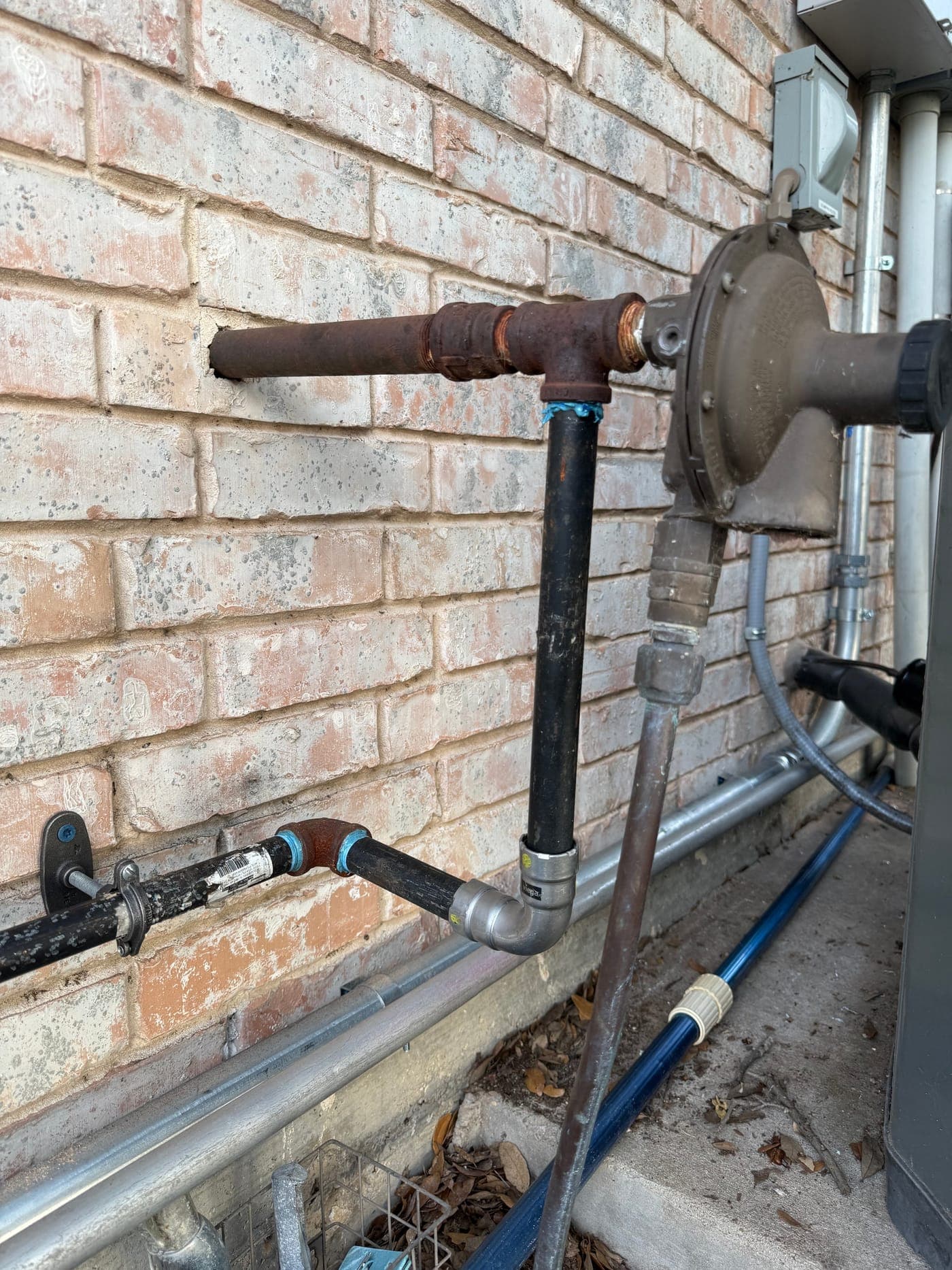
A permanently installed standby generator on natural gas will run continuously for as long as the gas system holds pressure and the engine gets the service it needs, which puts the practical limit at the oil change interval rather than at the fuel. On propane, the tank sets the ceiling. Either way, the first thing to understand is that the machine is designed for days, not hours.
Most outages never test that. The EIA reported that United States electricity customers averaged about eleven hours of interruption across all of 2024, and that major events accounted for roughly 80 percent of those hours. The average is short. The events that matter are not, and they are the reason the generator is on the pad.
The three limits, in the order you hit them
1. The oil
This is the one that surprises people. Air-cooled home standby engines commonly specify oil and filter service in the region of 100 to 200 run hours, or annually, whichever comes first. Do the arithmetic on that: 100 hours is a little over four days of continuous running. A serious winter event can put a generator past its service interval before the roads are clear.
Small air-cooled engines also consume some oil under sustained load, so the level falls as well as ages. Every modern unit has a low oil pressure shutdown, and it will use it. A generator that stops on day five of an outage is very often a generator that ran out of oil rather than one that broke.
2. The fuel
Natural gas is effectively unlimited at the house while the distribution system is intact. Propane is not, and the number is arithmetic: tank size, usable capacity and consumption at load give you the days. A 500 gallon tank on a mid-size unit at moderate load is roughly a week. A 1,000 gallon tank is roughly two.
3. The continuous-run guidance
Beyond a few hundred hours of unbroken running, the common industry advice is to plan a shutdown and inspection rather than simply carrying on. Figures around 500 hours get cited frequently. This is a long way past any outage most households will experience, and it matters mainly for properties using standby power as a stopgap for weeks rather than days.
| Limit | Typically bites at | What you see |
|---|---|---|
| Oil and filter service | ~100 – 200 run hours on air-cooled units | Falling level, then a protective shutdown on low oil pressure |
| Air filter restriction | Dust and debris dependent; sooner in a dry summer | Power loss under load, rough running, rising temperatures |
| Propane supply | Set by tank size and load, commonly 7 – 22 days | Unit stops, or stumbles as tank pressure falls in cold weather |
| Natural gas supply | While the system holds pressure at the meter | Low fuel pressure fault if the line was undersized for full load |
| Cooling and ambient heat | Any sustained run in Texas summer with restricted airflow | High temperature shutdown |
| Continuous-run guidance | Commonly cited around 500 hours | Planned shutdown for inspection rather than a fault |
Typical planning figures only, not manufacturer specifications and not a quote. Service intervals vary by model, engine and cooling type; the manual for your unit governs. Fuel figures assume a correctly sized supply. Run hours are engine hours, which the controller displays.
Changing oil during an outage
If an outage is going to pass the service interval, the choice is a mid-outage oil change or an engine running past its schedule. The change itself is not complicated, but it happens on a machine that will restart automatically the moment it is asked to, and that is the part to respect.
The sequence matters. Put the controller in OFF so the unit cannot auto-start, then isolate the battery, then let the engine cool. Skipping either of the first two steps is how people get hurt. If you are not confident doing that, this is a service call, and it is a legitimate one during an extended outage. Have the correct oil grade and a spare filter on the shelf before the season starts, because the day you need them is the day the parts counter is closed.
Owners on a maintenance plan are in a better position here for a straightforward reason: the unit went into the outage with fresh oil and a clean filter, so the interval is a long way off rather than looming.
What actually stops a generator on day three
Fuel gets the attention. In practice the calls we take during long outages cluster around a short list, and it is worth knowing in order.
- Oil. Level, age, or both. The protective shutdown does its job and the homeowner reads it as a failure.
- Fuel supply that was never right. A gas line sized for a smaller appliance behaves perfectly at light load and sags when the air conditioner and the well pump come on together. The unit starts, runs, then faults under load. The machine gets blamed and the pipe is the problem.
- Air. A filter loaded with dust, grass seed or cottonwood, or intake louvres blocked by leaves and debris piled against the enclosure.
- Heat. A Texas August, a unit running near its ceiling and anything obstructing airflow around the enclosure add up to a high-temperature shutdown.
- Load creep. Day one the household is careful. By day three the oven, the dryer and the shop are all in use and the generator is being asked to do more than it was sized for. Load management handles this automatically, which is exactly why it belongs in the design.
- Wildlife. Wasp nests in the enclosure, fire ants in the controller and rodent damage to the wiring harness are ordinary rural failures, not freak events. Our maintenance checklist covers what to look for.
- The battery, for the restart. Any protective shutdown means the unit has to crank again to resume. A weak battery turns a five-minute fix into a dead machine.
Notice what is not on that list: the engine wearing out. Standby generators very rarely fail from running. They fail from not being ready to run.
The exercise cycle, and why it matters for runtime
Every standby unit runs itself on a schedule, typically weekly or every other week for a set number of minutes. That short run circulates oil, keeps seals from drying out, burns off condensation and confirms the machine still starts, which is the point. It also lets the controller log a fault before an outage rather than during one.
Two practical notes. Set the exercise for a civil hour, because your neighbors will hear it. And on propane, remember that every exercise costs fuel: a small draw, repeated fifty-two times a year, that belongs in your tank planning.
Day one of a long outage: a short list
- Note the run hours on the controller. That is your clock for the service interval, and it is far more useful than guessing from the calendar.
- Check the propane gauge and do the arithmetic. Decide on day one whether you need a delivery, not on day four when everyone else is calling.
- Walk the enclosure. Nothing stacked against it, nothing blown up against the intake, no obvious oil on the pad.
- Keep the load sensible. The generator is running the house, not hosting a normal week. Large discretionary loads can wait.
- Watch the oil level if the outage is going long. Engine off, unit in OFF, battery isolated, engine cool.
Do those five things and a multi-day outage is uneventful, which is the entire objective. If the unit does fault and you cannot clear it safely, generator repair is what we are for, and after hours during an outage is exactly when those calls come in. If you are still deciding whether a system belongs at your property, start with what a whole-home generator actually powers and then talk to us about installation.
Written by the Armored Power Systems team. Systems designed under Master Electrician oversight, TECL #41587.
Common questions
Runtime questions we get asked most
Can a standby generator run continuously for days?
Yes, and that is what it is built for. A permanently installed standby unit on an adequate fuel supply will run day and night through a multi-day outage. What limits it is not the ability to keep going but the service the engine needs along the way, principally oil, and on propane the fuel in the tank. Both are manageable if you plan for them on day one rather than day four.
Do I really need to change the oil during a long outage?
If the run passes the service interval, yes. Air-cooled home standby engines commonly call for oil and filter service somewhere between 100 and 200 run hours, and 100 hours is only a little over four days of continuous running. Skipping it during an extended outage is how a generator that survived the storm develops a problem afterwards. Check your manual for the interval that applies to your unit.
Will the generator switch itself off when utility power returns?
Yes. The transfer switch watches the utility, waits out a stabilization delay so it is not fooled by a brief restoration, transfers the house back and then signals the generator to shut down. Most units then run for a cooldown period with no load before stopping. You do not need to do anything, and you should not try to hurry it.
Does running for several days shorten the generator’s life?
Running is what it exists to do, and hours accumulate the way they do on any engine. Industry sources commonly put residential standby life in the region of a few thousand run hours before major service, which is a great deal of outage time for most households. What actually shortens life is running hot, running at the ceiling of the machine’s capacity, and missing service intervals, not the fact of a long outage.
What is the most common reason a generator stops during an outage?
In the field it is usually one of three things: oil, air or fuel. Low oil level triggers a protective shutdown, a filter packed with dust or grass seed starves the engine, and a fuel supply that was never sized for full load sags when the house draws hard. All three are avoidable, and all three are cheaper to prevent than to fix during an ice storm.
Related
Keep reading
- Home Standby Generator Maintenance ChecklistWhat you can safely check yourself, what needs a technician, and why the battery causes more failed starts than every other component put together.
- Propane vs Natural Gas for a Standby GeneratorMost of rural Parker and Palo Pinto county has no gas main, which makes this the first real decision. Supply, output, tank sizing and runtime, side by side.
- Generator Maintenance PlansScheduled service tiers, and the first year of routine maintenance free on a new installation.
- Generator RepairDiagnostics and repair for units that will not start, shut down under load, or sit on a warning light.
Two ways to start
Which one are you?
Need a generator
We start with what has to keep running at your property — the well, the AC, the freezer, the shop — and size the system around it. You get a written proposal with the equipment, the electrical work and the site prep all in one number.
Already own one
Repair, diagnostics and scheduled maintenance for Generac, Kohler and Briggs & Stratton systems — including units another company installed. Tell us the brand and what it is doing and we will bring the right parts.